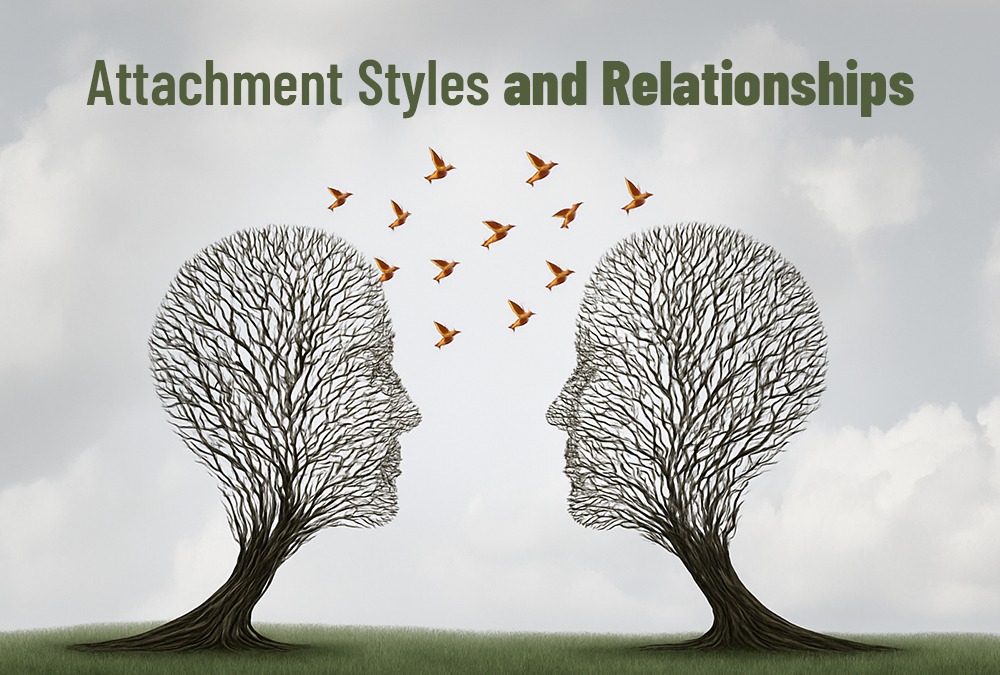
Attachment Styles and Relationships: Understanding the Blueprint of Human Connection
Introduction
Attachment theory offers one of the most comprehensive psychological frameworks for understanding how individuals form, maintain, and experience relationships. Developed by British psychologist John Bowlby in the mid-20th century and expanded upon by Mary Ainsworth, this theory posits that early interactions with primary caregivers create internal working models that shape a person?s approach to intimacy, trust, and emotional regulation throughout life.
Attachment styles?secure, anxious, avoidant, and disorganised?provide a lens through which we can understand common relational patterns, emotional responses, and interpersonal dynamics in adulthood. These styles are not fixed identities but evolving strategies influenced by life experiences, personal insight, and relational healing.
In this article, we will explore:
- The foundations of attachment theory
- The four primary attachment styles
- How each attachment style affects romantic and platonic relationships
- The interaction between different attachment styles
- The path to developing secure attachment
Foundations of Attachment Theory
Bowlby’s Legacy
John Bowlby theorised that humans are biologically hardwired to seek proximity to caregivers for safety and survival. This attachment system ensures that infants remain close to their caregivers, particularly in times of distress. Through repeated experiences, children internalise expectations about whether others are trustworthy and whether they themselves are worthy of care. These expectations form the basis of internal working models.
Ainsworth’s Strange Situation
Mary Ainsworth’s observational study, known as the “Strange Situation”, introduced empirical validation to Bowlby’s ideas. By observing how infants responded to separation and reunion with their mothers, Ainsworth identified patterns of attachment behaviour that she grouped into:
- Secure
- Insecure-avoidant
- Insecure-anxious
- Disorganised (added later by researchers)
These early attachment styles often carry forward into adolescence and adulthood, influencing emotional regulation, intimacy, and relational expectations.
The Four Primary Attachment Styles
1. Secure Attachment
Securely attached individuals generally had caregivers who were consistently responsive, emotionally available, and attuned to their needs. As adults, they tend to:
- Feel comfortable with intimacy and autonomy
- Communicate openly and effectively
- Trust others and view themselves as worthy of love
- Resolve conflicts constructively
In relationships, secure individuals tend to foster emotional safety, tolerate ambiguity, and support their partner?s individuality. They are not free of relational challenges but are more likely to navigate them with resilience and self-awareness.
2. Anxious (Preoccupied) Attachment
Anxiously attached individuals often experienced inconsistent caregiving. Sometimes their needs were met; other times, they were ignored or responded to unpredictably. This leads to a hyperactivation of the attachment system.
Adults with anxious attachment often:
- Crave closeness but fear abandonment
- Require frequent reassurance
- Overanalyse interactions
- Struggle with emotional regulation and fear of rejection
They may be seen as ?clingy? or overly dependent, but this behaviour is rooted in a fear of loss and a learned sense that love is conditional or unstable.
3. Avoidant (Dismissive) Attachment
Avoidantly attached individuals usually experienced emotionally distant or rejecting caregivers. As a result, they deactivate their attachment system as a coping mechanism, learning to rely on themselves.
In adult relationships, avoidant individuals often:
- Appear emotionally distant or unavailable
- Struggle with vulnerability and commitment
- Equate closeness with a loss of independence
- Downplay the importance of intimacy
They may prioritise logic over emotion and prefer casual or surface-level relationships. Their internal model often suggests that others are unreliable and emotional dependence is risky.
4. Disorganised (Fearful-Avoidant) Attachment
Disorganised attachment usually stems from trauma, abuse, or severe neglect. Caregivers may have been a source of both comfort and fear, creating confusion and disorientation in the attachment system.
In adulthood, those with disorganised attachment:
- Desire intimacy but fear it at the same time
- Exhibit unpredictable or contradictory behaviour
- May struggle with emotional dysregulation
- Experience high levels of relational stress or volatility
This style often co-occurs with unresolved trauma and can manifest in patterns of push-pull dynamics, self-sabotage, and difficulty trusting others.
Attachment Styles in Romantic Relationships
Secure with Secure
This pairing tends to result in stable, satisfying relationships. Both partners are able to communicate openly, manage conflict constructively, and support one another without losing their sense of self. Disagreements are not catastrophic but viewed as opportunities for growth.
Secure with Anxious or Avoidant
The secure partner can serve as a corrective experience, helping their anxious or avoidant partner move toward secure functioning. They provide reassurance without enabling dependency (for anxious) or respect space without withdrawing emotionally (for avoidant). However, the secure partner may eventually feel drained if their needs are consistently sidelined.
Anxious with Avoidant
This is one of the most common but challenging pairings. The anxious partner seeks closeness; the avoidant partner seeks distance. This can lead to a pursuer-distancer dynamic where both reinforce each other?s insecurities:
- The more the anxious partner seeks reassurance, the more the avoidant withdraws.
- The more the avoidant withdraws, the more the anxious partner panics.
These relationships often experience high drama, miscommunication, and emotional pain, yet can feel ?magnetic? due to unresolved attachment wounds.
Disorganised with Any Style
Disorganised individuals may experience intense emotional highs and lows, leading to chaotic relationship patterns. They may alternate between clinginess and detachment, making it hard for partners to feel stable. Relationships can be marked by fear of intimacy, fear of abandonment, and struggles with trust. Healing often requires individual therapy and trauma work.
Friendships and Attachment
While most research focuses on romantic attachment, attachment styles also influence friendships. Securely attached individuals tend to form reciprocal, supportive friendships. Anxiously attached individuals may become overly involved or fear being left out, while avoidantly attached people may avoid deep connection, prefer acquaintances, or find it difficult to express vulnerability.
Children and adolescents often display similar patterns in peer relationships, which can affect social development, emotional intelligence, and self-esteem.
Parenting and Intergenerational Patterns
Attachment styles are often passed down through generations, not genetically but behaviourally. A parent with an unresolved attachment history may unconsciously replicate the same relational dynamics they experienced.
For example:
- An avoidantly attached parent may emotionally distance themselves from their child?s distress.
- An anxiously attached parent may project their fears or over-identify with their child?s struggles.
- A securely attached parent typically models emotional regulation, healthy boundaries, and attunement.
Recognising one?s attachment style is crucial for breaking intergenerational patterns and fostering secure attachment in children.
Can Attachment Styles Change?
Yes. Attachment styles are not life sentences. They are adaptive strategies formed in response to early experiences, and they can shift through:
- Therapy, particularly approaches like Emotionally Focused Therapy (EFT), Schema Therapy, or Internal Family Systems (IFS)
- Self-awareness and reflection, such as journaling or mindfulness practices
- Corrective relational experiences, including secure romantic or friendship bonds
- Parenting, which can serve as a catalyst for healing one?s own inner child
- Somatic or trauma-informed interventions for disorganised or trauma-linked attachment styles
Movement toward secure attachment is often described as developing earned security, where one has processed and integrated past wounds to create a healthier relational approach.
Attachment Styles and Communication
Each attachment style communicates in distinct ways, particularly under stress:
- Secure: Open, responsive, grounded ? needs mutual understanding, repair
- Anxious: Over-communicates, may blame or panic ? needs reassurance, presence
- Avoidant: Shuts down, avoids emotional talk ? needs space, autonomy
- Disorganised: Conflicted, chaotic or intense ? needs safety, regulation
Understanding these tendencies helps couples depersonalise conflict and respond with empathy rather than reactivity.
The Role of Attachment in Mental Health
Attachment style is not only a relational construct?it is deeply tied to mental health. Insecure attachment is associated with higher rates of:
- Anxiety disorders
- Depression
- Borderline personality traits
- Substance misuse
- Trauma symptoms
Therapy that addresses attachment issues often yields broad benefits across emotional regulation, self-worth, and interpersonal functioning.
Healing and Moving Toward Secure Attachment
Whether you’re navigating dating, long-term partnership, parenting, or friendship, healing attachment wounds is possible. Here are some strategies to develop more secure relational patterns:
- Identify Your Style
- Develop Self-Compassion
- Set Boundaries
- Practice Emotional Regulation
- Seek Secure Relationships
- Engage in Therapy
Conclusion
Attachment styles are the blueprints of our relational world?they shape how we love, trust, fight, and heal. While early relationships set the foundation, they do not determine our destiny. With self-awareness, intentional effort, and healthy connection, we can evolve our attachment style and experience relationships that are safe, nurturing, and emotionally fulfilling.
Understanding your attachment style is not just a psychological exercise; it?s a pathway to deeper connection, better communication, and lasting intimacy.